



Do you aspire to capture photos adorned with a captivating bokeh effect? Look no further.
In this comprehensive guide, I will demystify all aspects of bokeh, covering:
- Understanding Bokeh: What it Signifies
- Mastering Bokeh Camera Settings: The Key to Excellence
- Crafting Stunning Bokeh: Techniques for Astonishing Results
Throughout this journey, I will provide numerous examples of bokeh, offering you a clear vision of the potential in your own photography.
If you are eager to elevate your skills and become a bokeh virtuoso, let’s embark on this enlightening journey!
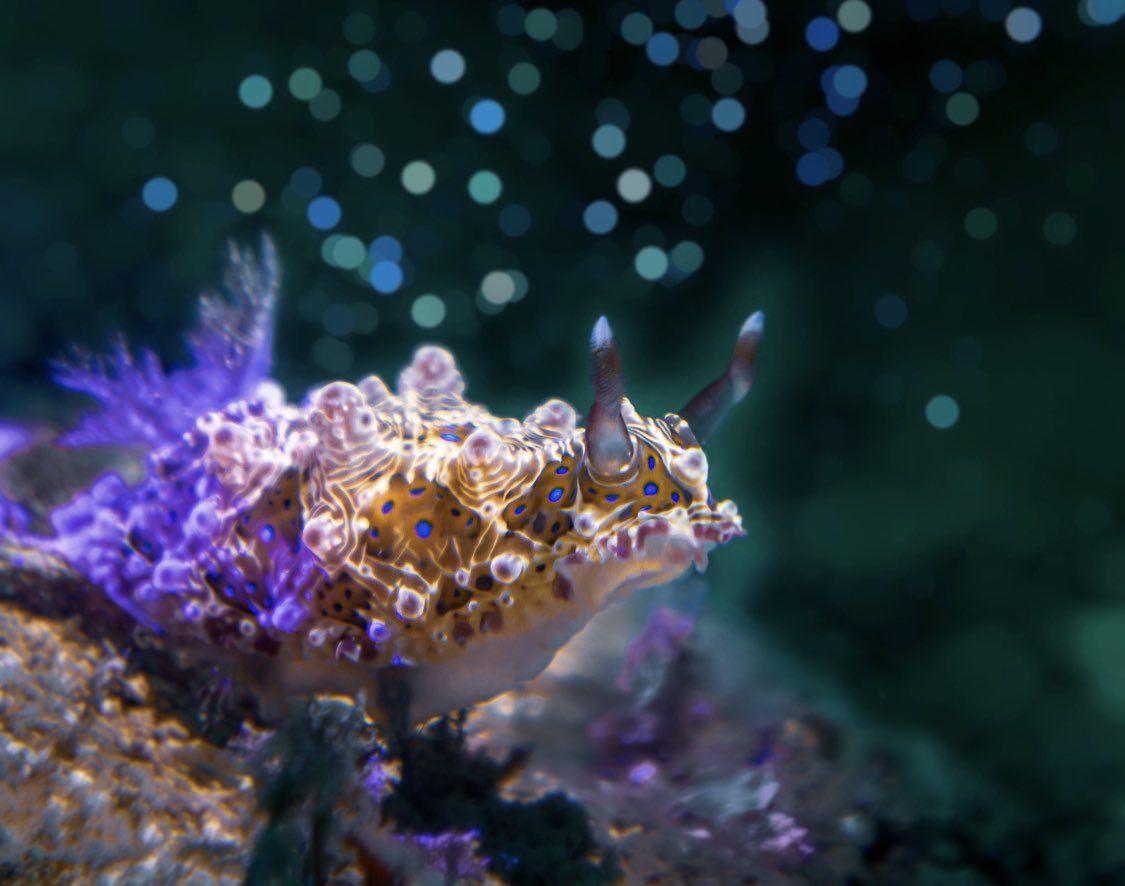
Unraveling the Essence of Bokeh in Photography
Bokeh, a term often used in photography, refers to the artistic rendering of out-of-focus areas in an image, particularly those that are gracefully blurred. It is characterized by the presence of rounded, soft shapes in the background of photographs.
Bokeh Effect in Photography
Professional photographers frequently employ the bokeh effect as a means to draw attention to the primary subject while infusing an artistic dimension into the overall composition. Portrait photographers, for instance, rely on the velvety background bokeh to enhance their work, but bokeh also finds extensive use in genres such as wildlife, product, food, and event photography.
It is essential to note that, in broad terms, the term ‘bokeh’ encompasses all aspects of background (or foreground) blur within an image. Consequently, one can encounter both beautiful bokeh, characterized by smooth and visually pleasing out-of-focus areas, as well as undesirable bokeh, where the blurred regions may exhibit excessive detail or appear jagged. In the later segments of this article, I will delve into the factors that differentiate good bokeh from its less appealing counterpart. For now, understand that bokeh comes in various forms, not all of which are equally enchanting.

The Quintessential Elements Shaping Bokeh Quality in Your Photographs
For beginners, achieving captivating bokeh effects can be a challenging endeavor. Bokeh is a nuanced aspect of photography that defies simplification; it is not merely a matter of tweaking a single camera setting and achieving perfection.
Instead, the quality of bokeh in your photographs is governed by five fundamental factors:
- Aperture Size: This refers to the diameter of the aperture in your lens that regulates the amount of light entering the camera.
- Lens Selection: Your choice of lens significantly influences the bokeh’s appearance and quality.
- Camera-to-Subject Distance: The distance between your camera and the subject plays a pivotal role in shaping the bokeh effect.
- Subject-to-Background Distance: The space separating the subject from the background is another vital factor in crafting bokeh.
- Background Quality: The characteristics of the background, including its texture and lighting, are crucial in determining the overall bokeh effect.
Let’s delve into each of these factors, commencing with:
1. Aperture size
The aperture, a crucial component in photography, is essentially a hole within your lens. Its size corresponds to the f-number setting on your camera.
A low f-number, such as f/1.8 or f/2.8, signifies a wide aperture, while a high f-number, such as f/11 or f/16, indicates a narrow aperture. The width of the aperture plays a pivotal role in creating a mesmerizing bokeh effect. This is because the broader the aperture, the greater the extent of background blur that the lens can produce.
In contrast, a narrow aperture results in images that maintain sharpness from the foreground to the background. This is precisely why landscape photographers typically opt for settings beyond f/8; they aim to achieve full scene clarity.
When you encounter enchanting bokeh images, they are often captured at f/4 or wider apertures, with many taken at f/2.8, f/1.8, or even the ultra-wide f/1.2.
However, it’s essential to note that not all lenses offer the capability to shoot at ultra-wide apertures, as elaborated below.
2. Lens choice
Bokeh quality in lenses varies for several reasons.
Firstly, the size of a lens’s maximum aperture significantly impacts bokeh quality. As previously discussed, a wide lens aperture contributes to exceptional bokeh. In contrast, a narrow aperture results in restless, distracting bokeh that fails to complement the subject effectively.
Secondly, the shape of the lens aperture plays a pivotal role in determining bokeh characteristics. Some lenses feature circular apertures, while others exhibit hexagonal, septagonal, or octagonal shapes. The shape of the aperture is primarily determined by the number of aperture blades, which can be found on the lens specification sheet. A greater number of blades results in a more circular aperture, leading to smoother and more pleasing bokeh.
Thirdly, the focal length of the lens impacts background compression and, consequently, bokeh quality. Longer lenses tend to compress the background more, creating a blurrier background. In the realm of bokeh, a longer focal length translates to better results.
To achieve the finest bokeh, consider acquiring a lens with an extended focal length (e.g., 200mm), a generous maximum aperture (e.g., f/2.8), and an abundance of aperture blades (9 or more).
3. Proximity to Your Subject
The proximity between your camera and the subject plays a pivotal role in magnifying the background bokeh effect in your photographs.
As you draw closer to your subject, the bokeh effect in the background intensifies, creating a more pronounced blur. Conversely, when you step away from your subject, the bokeh effect diminishes.
Hence, getting closer to your subject enhances the bokeh effect in your images.
There are two primary approaches to achieving this:
- Physical Approach: You can physically move closer to your subject, bringing the lens into close proximity.
- Telephoto Lens Utilization: Alternatively, you can opt for a telephoto lens with focal lengths such as 300mm, 400mm, or even 800mm. These lenses provide powerful zoom capabilities, allowing you to bring your subject closer without changing your physical position.
The use of telephoto lenses is particularly convenient when working with elusive or easily startled subjects, such as birds and wildlife. Nevertheless, there are instances where physically getting up close and personal with your subject can yield a more intimate perspective, a recommendation often made in portrait photography.”
4. Distance between the subject and the background
The distance between your subject and the background plays a crucial role in achieving the desired bokeh effect in photography.
When your subject is positioned close to the background, the background remains relatively clear, resulting in a weaker bokeh effect. Conversely, if you position your subject far from the background, the background becomes more blurred, creating a pleasing aesthetic.
For instance, imagine you’re capturing a photograph of a child standing in front of a tree. If you place the child right against the tree so that their back touches the bark, both the child and the tree will be sharply in focus, and you’ll have minimal bokeh. However, if you move the child away from the tree, the bark will gradually start to blur.
In reality, increasing the distance between your subject and the background is one of the simplest ways to enhance your bokeh, particularly if you don’t have access to a wide-aperture lens. The further your subject is from the background, the more striking the resulting bokeh effect will be.
5. Quality of the background
Certain backgrounds are readily blurred, while others present more challenges in achieving a smooth bokeh effect. This behavior typically aligns with our expectations: backgrounds with consistent and uniform elements, such as a dense forest of green leaves, tend to yield a very pleasing and smooth bokeh. On the other hand, backgrounds characterized by chaotic and irregular features, such as a bustling crowd of people, cars, and houses, often result in distracting bokeh.
However, there are additional aspects of backgrounds to take into account. For example, if you compose your image in such a way that light filters through a particular area of the background, you can often capture breathtaking bokeh effects.
Bokeh photography factors: putting it all together
Bokeh photography involves a combination of the five factors I’ve discussed, all working in harmony to achieve the best possible bokeh quality.
Even if you’re unable to make adjustments to one of these factors, such as the quality of your lens, you still have the flexibility to modify the other factors to achieve a pleasing result.
While it’s true that the most exceptional bokeh effect arises from optimizing each of the factors mentioned earlier, this isn’t always feasible. There might be situations where you need a narrow aperture for reasons unrelated to bokeh, or you need to keep the subject close to the background, or you can’t physically get closer, among other scenarios. In such cases, it becomes essential to consider the remaining bokeh factors and make the most of the ones within your control.
Bokeh and sensor size
Have you ever pondered the impact of your camera’s sensor size on achieving beautiful background bokeh? You’re certainly not alone! Many photographers, especially when in the process of selecting a new camera, are curious about the relationship between sensor size and the quality of background bokeh.
Let’s begin with the fundamentals. If you were to compare images captured side by side using APS-C and full-frame cameras, both equipped with 50mm lenses, you would observe differences. The image taken with the APS-C camera would appear more tightly framed, while the full-frame image would have a wider field of view. This difference arises not from any inherent properties of the sensors themselves but rather because the smaller APS-C sensor effectively crops the image.
Technically speaking, the images that reach the back of the camera are identical, but during the capture process by the sensor, the APS-C file undergoes cropping. This means that the depth of field, which represents the area in focus, will be the same in both files, even though the APS-C image might seem more tightly framed. To achieve an equivalent composition to that of the full-frame image, the APS-C camera would need to be positioned several feet closer to the subject.
So, what’s the takeaway from all of this? Larger sensor sizes tend to produce more appealing bokeh in a similar composition. However, it’s not an inherent property of larger sensors but rather a consequence of the internal cropping that occurs with smaller sensors. Understanding this concept will empower you to make the most of your camera, regardless of its sensor size.
How to achieve nice bokeh: the step-by-step process
I’ve previously explained the theory behind achieving good bokeh. In this section, I’d like to provide practical guidance on how to attain the best possible bokeh for various situations.
Step 1: Choose the Appropriate Lens
Your journey to achieving great bokeh begins with your choice of lens. Opt for a lens with a wide maximum aperture, ideally at f/2.8 or wider, although f/4 can also yield good results. When possible, select a lens with a higher number of aperture blades, as a more circular aperture shape enhances bokeh quality. Additionally, it’s advisable to use a standard or telephoto focal length rather than a wide-angle lens.
Step 2: Set a Wide Aperture
Bokeh is primarily influenced by one camera setting: the aperture. To maximize the bokeh effect, select the lowest f-number available on your lens. However, if your lens offers options like f/1.2 or f/1.4 and you’re shooting from a very close distance, consider slightly narrowing the aperture to prevent your subject from going out of focus. If you’re unsure about adjusting the aperture, consult your camera’s manual. Typically, you’ll need to switch to Manual mode or Aperture Priority mode, then adjust the aperture dial to achieve your desired result. Some lenses may have an aperture ring on the barrel for manual aperture adjustments.
Step 3: Get Close to Your Subject
Identify your desired subject and approach it closely. You can achieve this either by physically moving closer or by using a longer lens for a tighter perspective. It’s worthwhile to experiment with both approaches, as they yield slightly different effects. Longer lenses tend to compress the background, creating smoother bokeh, but they may reduce intimacy in the shot. You might discover a preference for one look over the other.
Step 4: Optimize Your Subject’s Background
If you have the flexibility to reposition your subject or request them to move (particularly in portrait photography), place them in front of a uniform, non-distracting background. Ensure that your subject is positioned at a distance from the background to enhance the bokeh effect. If relocating your subject is not an option, consider adjusting your shooting perspective. Lowering your camera angle can eliminate distracting background details, while moving to the side can increase the distance between the subject and the background.
Step 5: Adjust Remaining Settings for Proper Exposure
By this stage, you’ve taken all the necessary steps to achieve optimal bokeh. Determine the remaining camera settings required for a well-exposed shot, including your shutter speed and ISO. Maintain focus on your subject and thoroughly inspect the background to eliminate any distractions. Once everything is in order, capture your photo.
After taking a shot or two, review the images on your camera’s LCD screen. Pay close attention to the quality of the background bokeh. Ask yourself how it looks and if there are any adjustments you can make to enhance it. Implement any necessary changes, and then take another shot.
Tips and tricks for creating beautiful bokeh effects
Looking to take your bokeh photography to the next level? Here are some valuable tips to enhance that creamy background blur:
1. Capture During the Golden Hours
Golden hour lighting is a magical time for photographers and can greatly enhance your bokeh photography. It refers to the period shortly after sunrise and just before sunset when warm, soft light bathes everything, creating a stunning backdrop for bokeh. You can experiment with backlighting during this time by positioning your subject between the camera and the sun to achieve a luminous effect. Different angles and lighting positions can yield breathtaking results. To determine the golden hour in your location, there are apps and websites available to assist you.
2. Explore Macro Lenses
Macro lenses allow for close-up photography, which can result in stunning bokeh effects. The closer you are to your subject, the more pronounced the bokeh appears. Macro lenses enable you to focus on subjects at an incredibly close range, opening up creative possibilities. By using a macro lens and setting a wide aperture, you can create a narrow window of sharpness, resulting in creamy background bokeh. Select a macro lens with a wide aperture and a suitable focal length for your subjects, and don’t hesitate to experiment to discover captivating results.
3. Master Precise Focusing
Achieving precise focus is crucial when working with shallow depth of field in bokeh photography. Even slight focusing errors can ruin your image, causing the subject to be out of focus. To avoid this, focus deliberately and consider using manual focus for better control. Start by carefully selecting the focus point, especially if you’re photographing people—focusing on the eyes is usually a good approach. Use your camera’s zoom-in feature in Live View mode to fine-tune the focus point, whether manually or with autofocus. Practice focusing on subjects at various distances and with different techniques to develop your skills.
4. Experiment with Bokeh Abstracts
Bokeh can serve as both a background effect and the main subject of your photo, leading to intriguing abstract images. Create bokeh abstracts by shooting subjects with small points of light, such as Christmas lights or fairy lights, in a dark environment. Use a wide aperture and switch to manual focus. Focus deliberately in front of your subject to transform the points of light into soft, glowing orbs, producing the bokeh effect. Experiment with different angles, distances, and focus points to manipulate the appearance of bokeh. Bokeh abstracts offer a creative way to explore your artistic side and can be used in various photographic compositions.
5. Customize Bokeh Shapes
Adding custom bokeh shapes to your images adds a personalized touch to your photography and is a simpler process than you might think. To create custom bokeh shapes, cut out a lens-sized piece of paper and then cut a custom shape within it. Place the paper directly on your lens’s front element, similar to a filter, and use a wide aperture. Identify a subject that produces strong bokeh, like fairy lights, and adjust the focus until the subject becomes a background blur. Start shooting to capture your customized bokeh shapes. Experiment with the size and shape of the cutout, subject distance, and focus settings to achieve desired results. Custom bokeh shapes allow for creative customization of your photos, making them unique and tailored to your image’s theme.
Remember to be patient and embrace the creative process. It may require some trial and error, but mastering these techniques will elevate your bokeh photography to new heights.
How to get a bokeh effect: final words
With these tips in mind, you should feel well-prepared to venture out with your camera and capture captivating bokeh.
Don’t forget to select the appropriate lens, fine-tune your camera settings, position yourself strategically, and carefully consider your background.
Before you know it, you’ll be mastering bokeh photography like a true professional!