



On October 15, 2023, during its flyby, the Juno spacecraft captured stunning images of Jupiter’s fifth moon, Io. These recent photographs reveal the breathtaking volcanic landscape of the most volcanically active celestial body in our solar system.
The surface of Io presents a fascinating appearance, resembling scars or a tie-dye pattern with its mix of light and dark areas. Its surface is marked by eye-catching, molten-red spots, vividly contrasting with the surrounding terrain. Io is known for its surface lakes of molten silicate lava, and these latest images, processed by enthusiastic citizen scientists using raw data from Juno, display these fiery red areas in detailed clarity.
NASA shared these images on X (previously known as Twitter), but there’s more. The JunoCam onboard Juno has also helped NASA produce a time-lapse video of Io, giving viewers a dynamic view of the moon from various angles and highlighting Juno’s exploratory path.
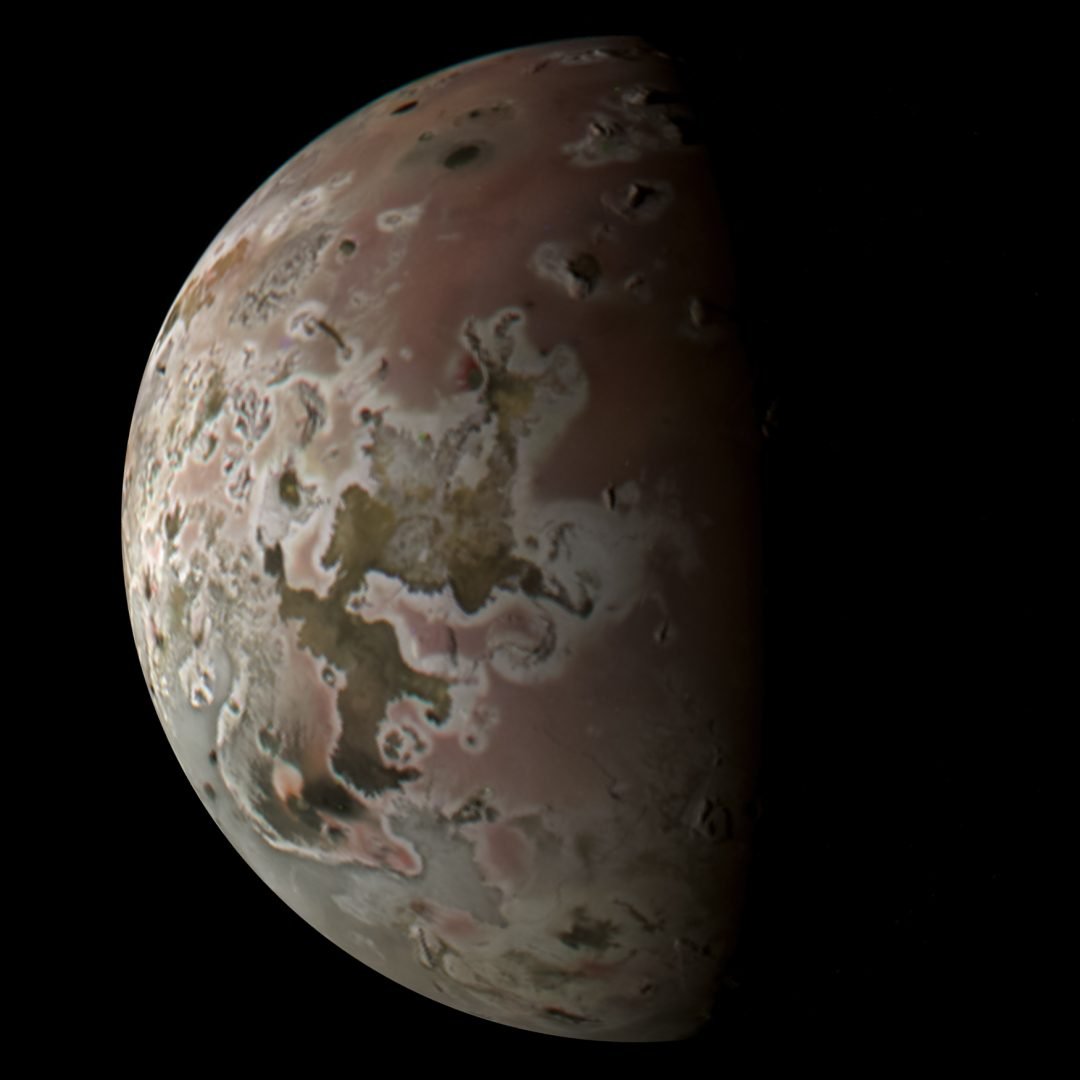
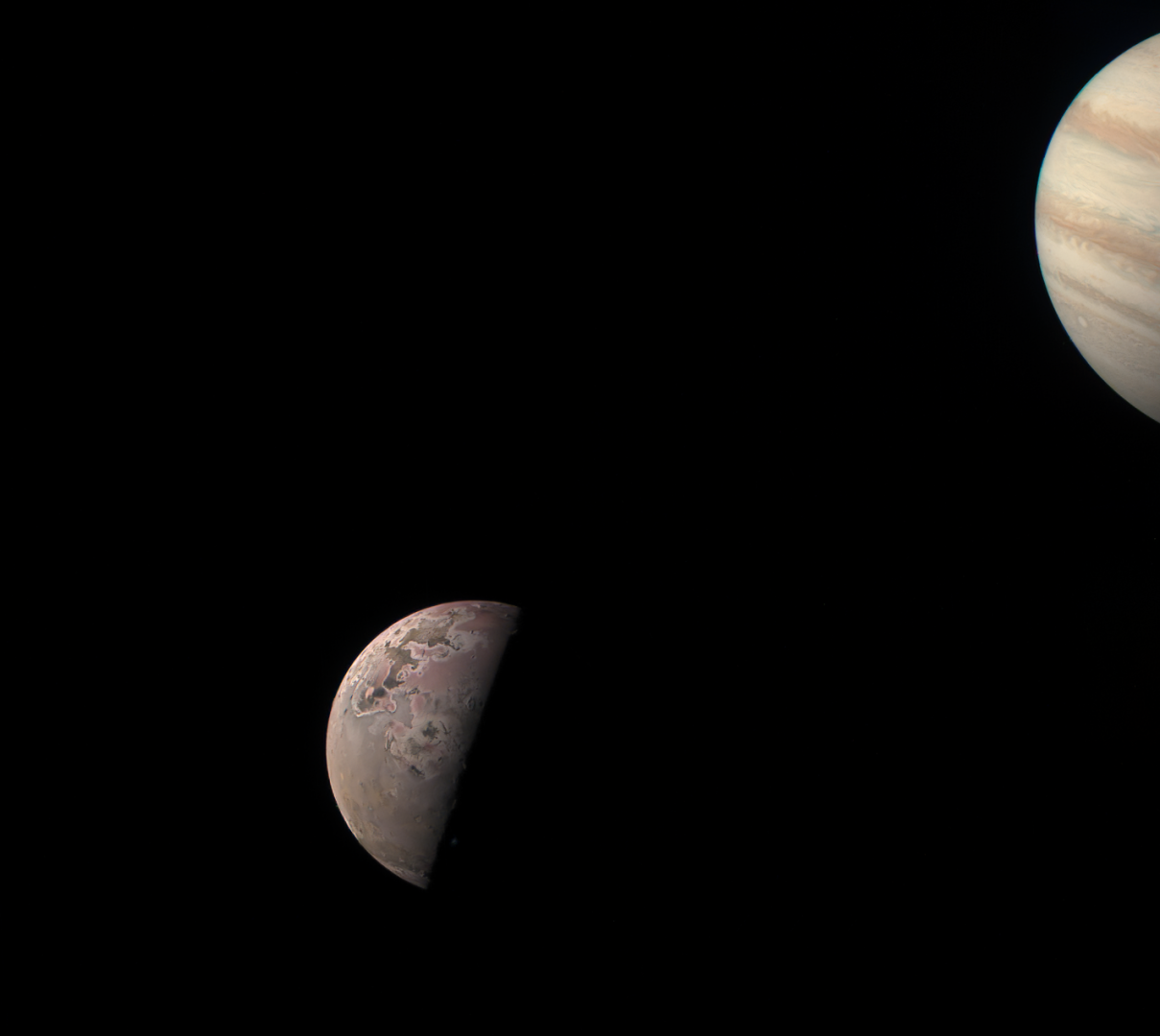
NASA/JPL-Caltech/SwRI/MSSS/Kevin M. Gill
To put things in perspective, Jupiter, the largest planet in our solar system, has 92 moons orbiting it, with Io being particularly notable. Not only is Io renowned for its intense volcanic activity, but it is also significant in size, being slightly larger than Earth’s moon and ranking as the fourth-largest moon in the solar system. It’s the third-largest of Jupiter’s moons and the closest of the Galilean satellites. These were the first group of moons observed by Galileo Galilei in 1610, orbiting a planet other than the sun.
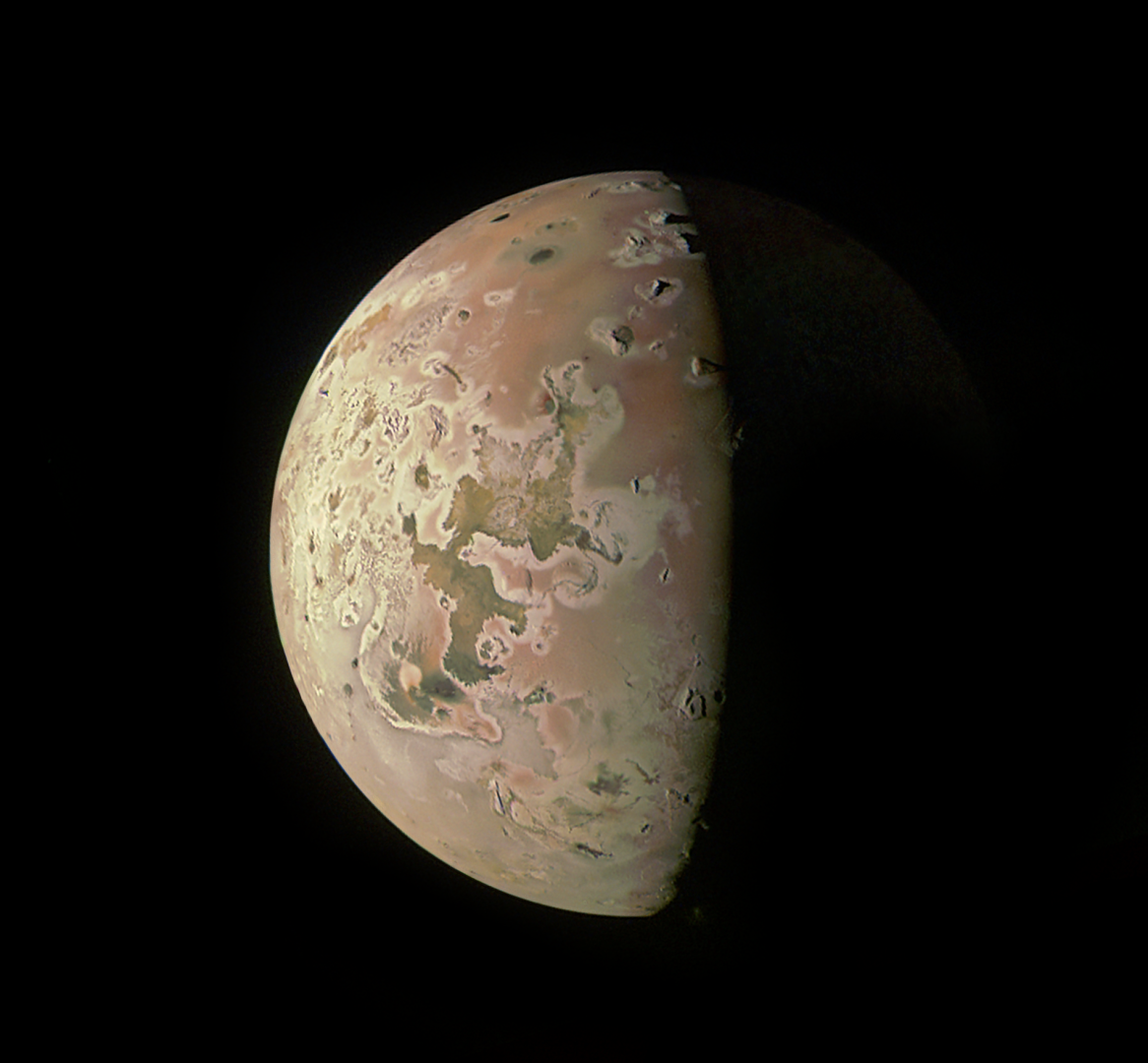
NASA/JPL-Caltech/SwRI/MSSS/Ted Stryk
Io’s volcanic nature is characterized by numerous active volcanoes on its surface, regularly erupting to emit molten lava and sulfur-rich gas plumes that reach high into its atmosphere. This volcanic activity is so intense that it can even be observed from Earth with a powerful telescope.
In an effort to engage the public in space exploration, NASA has made Juno’s images of Io accessible for download and analysis. This initiative allows anyone interested to become a part of NASA’s community of citizen scientists, contributing to the understanding and study of this fascinating moon.