



Butterflies, these exquisite insects, present a formidable challenge for photographers. They are not only unpredictable but also incredibly small and surprisingly swift. Without the right tricks and techniques, you may find yourself returning home with memory cards filled with disappointing shots.
But fear not! In this comprehensive guide, I will take you into the enchanting world of butterfly photography and unveil the secrets that will elevate your butterfly images to new heights. From selecting the appropriate equipment to employing creative strategies, I will equip you with the tools and knowledge you need to become a master of butterfly photography, regardless of your prior experience.
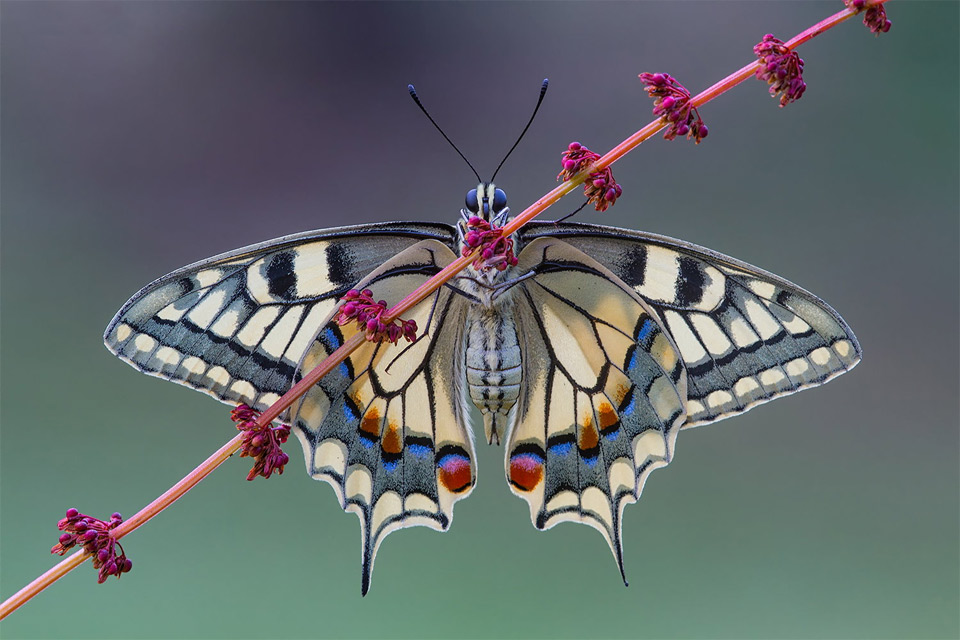
So, if you’re eager to start capturing razor-sharp shots that showcase the unparalleled beauty of these winged wonders, let’s dive right in!
1. Opt for a Macro or Telephoto Lens for Optimal Results
Butterfly photography tips To capture those mesmerizing close-up shots of butterflies, having the right lens in your photography arsenal is essential. Your gear should do the heavy lifting, so here’s what you need to know:
For intricate detail and filling the frame with your delicate subjects, choose a telephoto or long macro lens. These lenses provide the reach and magnification required to get up close and personal with butterflies.
If available, a telephoto lens within the 200-500mm range can work well. However, pay close attention to the lens’s minimum focusing distance when making your selection. Some telephoto lenses excel at long-distance zooming but struggle to focus on objects up close. Given the small size of butterflies, this factor is crucial to consider.
For exceptional results, consider a dedicated telephoto macro lens, such as a 150mm or 180mm lens. These lenses are renowned for their exceptional sharpness. However, even with a 180mm lens, you’ll still need to exercise patience and get relatively close to the butterflies to effectively fill the frame.
2. Utilize a Tripod with a Loose Head
Butterfly photography tips Butterflies are known for their rapid movements, darting from one flower to another with agility. This means that you often won’t have the luxury of time to set up your equipment and lock your tripod firmly in place. Nevertheless, using a tripod can provide stability, reducing the risk of camera shake and resulting in sharper images.
My recommendation? Bring a tripod along, but keep the head loose. This allows you to quickly adjust your camera to track the butterflies while still benefiting from added stability. It will also prevent your arms from tiring as you wait for the perfect butterfly pose.
If a tripod feels too cumbersome or restrictive for your shooting style, consider an excellent alternative: a monopod. Unlike tripods, monopods have a single leg, making them easy to maneuver and adjust while tracking butterflies in motion. They are also lighter and more convenient to carry, which is advantageous during outdoor excursions.
Finally, some butterfly photographers prefer the freedom and flexibility of handheld shooting. If you choose this approach, ensure that your lens or camera has image stabilization to counteract camera shake, and refine your handheld shooting technique. Keep your elbows close to your body, consider bending your knees, or even kneel on the ground for added support.
3. Plan Your Photography Sessions During Cooler Weather
Butterfly photography tips When embarking on butterfly photography adventures, timing is of the essence. One secret to success lies in taking advantage of cooler weather conditions. Butterflies tend to be less active when it’s chilly outside, making them less likely to flutter around, even if they spot an enthusiastic photographer wielding a substantial lens.
To maximize your chances of capturing the perfect shots, schedule your butterfly photography outings on cooler days. Alternatively, opt for early morning sessions, as discussed further in this article. Shortly after sunrise, butterflies are typically in a more relaxed state, offering ample opportunities to capture their delicate beauty.
Of course, be sure to dress warmly! Just as butterflies feel the cold, you don’t want to freeze while pursuing that flawless shot.
4. Position Your Camera Parallel to the Butterfly’s Wings
Butterfly photography tips Achieving precise focus is paramount when capturing stunning butterfly photos. Whether you prefer getting up close or using a long lens, I often recommend aligning your camera’s sensor parallel to the butterfly’s wings.
Why is this crucial? In butterfly photography, depth of field is extremely limited, even with a narrow aperture setting. To maintain sharpness across the entire butterfly—from wingtip to wingtip—it’s essential to ensure that your camera’s sensor aligns perfectly with the butterfly’s wings. In other words, aim to photograph the butterfly in profile, especially for those ultra-close shots.
By positioning yourself correctly and aligning the sensor with the butterfly’s wings, you increase the likelihood of capturing the entire butterfly in sharp focus, wings and all. This technique enhances overall sharpness and detail in your photographs, producing impressive results.
However, if capturing a perfectly profiled shot proves challenging, don’t fret! Do your best to increase the depth of field. Even if you can’t achieve complete wing sharpness, ensure that the butterfly’s body remains in focus.
5. Shoot When the Butterfly Is Frontlit by the Sun
Butterfly photography tips Paying attention to lighting conditions is essential for capturing stunning butterfly photographs. While experimenting with different lighting directions is an option, my experience has shown that the best results are achieved when the butterfly is frontlit by the sun. Here’s why:
When the sun is positioned behind you, casting its warm rays over your shoulder, it creates beautiful illumination on the butterfly. This lighting setup enhances the intricate details and vibrant colors of the butterfly’s wings, making your photos truly shine (pun intended!).
While you may be tempted to shoot in backlight or sidelight, they can present challenges. Backlighting often leads to flare effects and makes it difficult to capture the butterfly’s features clearly. Sidelighting, on the other hand, can create shadows that obscure the butterfly’s delicate patterns.
To maximize your chances of capturing the perfect frontlit shot, choose your position carefully. Observe the butterfly and anticipate its movements. Be patient and wait until it moves into a position where the sun shines directly on it. Keep in mind that butterflies won’t pose on command, so a little patience can go a long way.
You may also wonder about the best time for butterfly photography. Most photographers prefer the golden hours, which occur early in the morning or late in the afternoon. During these times, sunlight has a warm, golden quality that adds a magical touch to your images. However, even on cloudy days, you can still capture stunning butterfly photos. Just remember that the lighting may be more limited, making it slightly challenging to achieve sharp shots.
6. Employ a Swift Shutter Speed
Butterfly photography tips In the realm of butterfly photography, three elements are almost perpetually in motion: your camera, the butterfly itself, and the flower upon which it alights. To capture sharp and clear images, which is undoubtedly the goal, utilizing a swift shutter speed becomes imperative.
The ideal shutter speed will vary depending on factors like your lens focal length, the distance to the butterfly, and the butterfly’s activity level. Nevertheless, as a general rule, aim to maintain your shutter speed above 1/250s, or even faster if circumstances allow.
If you are operating in Manual mode, you have the flexibility to select your preferred shutter speed. Pair it with a moderately narrow aperture, such as f/8, and then adjust the ISO settings until you attain a well-exposed shot. Personally, I often opt for ISO 400 to achieve a balanced exposure while preserving image sharpness.
By employing a swift shutter speed, you freeze the butterfly’s movements, ensuring that every intricate detail is captured without any blur. This approach enables you to showcase the delicate patterns on the wings and the enchanting beauty of these winged creatures.
7. Activate Your Camera’s Continuous Shooting Mode
Butterfly photography tips Butterflies, with their swift and unpredictable flight patterns, can pose a real challenge, even for seasoned photographers. To heighten your chances of capturing ephemeral and dynamic moments, I highly recommend enabling your camera’s continuous shooting mode.
This setting permits you to employ the “spray and pray” technique, where you hold down the shutter button to capture a rapid succession of shots, increasing the likelihood of freezing that perfect moment in sharp focus.
To make the most of continuous shooting mode, start by ensuring your camera boasts a relatively rapid continuous shooting rate, preferably exceeding 6 frames per second. Next, confirm that the continuous shooting mode is active and be prepared to seize any butterfly activity.
Before the butterflies arrive, focus your lens on a flower or a specific area where they frequently alight. By doing so, when you spot a butterfly approaching, you can simply hold down the shutter button and allow the camera to capture a series of shots. While perfection is never guaranteed, this approach significantly enhances your chances of preserving that fleeting instant when the butterfly is perfectly positioned or caught mid-flight.
When reviewing your images later, remember that continuous shooting yields a substantial number of frames, including several that may be out of focus or less than ideal. Nevertheless, don’t be discouraged! Keep in mind that even professional photographers sift through numerous frames to unearth the hidden gems. Take your time to meticulously scrutinize the sequence of shots. Handpick the ones that shine and discard the rest.
8. Exercise Patience and Let the Butterflies Come to You
Butterfly photography tips Occasionally, these splendid butterflies can be rather skittish. Approaching them directly may startle them and send them fluttering away. However, there’s a strategy I favor, and it involves patiently waiting for the butterflies to come to you.
Locate a patch of flowers where these graceful creatures frequently alight. Position yourself comfortably and prepare for a bit of a wait. (Yes, patience is the name of the game in butterfly photography!)
You will observe that while butterflies may be cautious of your approach, they are often more at ease landing on flowers right next to you if you are already in place. Be ready to wait. It may take 15 to 20 minutes or even longer for a butterfly to make an appearance.
During this waiting period, take the opportunity to fine-tune your camera settings and pre-focus on the area where the butterflies are likely to land. However, avoid sudden movements. The objective is to blend seamlessly into their surroundings, allowing the butterflies to forget about your presence and go about their delicate business undisturbed.
9. Mind Your Shadow on the Butterflies
Butterfly photography tips When striving to capture remarkable butterfly photographs, it is essential to be mindful of shadows. Butterflies, like most creatures, react to abrupt changes in light. If your shadow falls over them, they are likely to take flight. This is especially significant when photographing on sunny mornings and afternoons, as the low angle of the sun can easily create elongated shadows.
To minimize the risk of casting a shadow on your subject, consider positioning yourself at a lower angle. By getting closer to the ground, you can reduce the likelihood of your shadow interfering with the butterfly’s delicate presence. This not only decreases the chance of disturbing the butterfly but also provides a more intimate perspective, immersing the viewer in the miniature world of these exquisite creatures.
10. Opt for Morning Photography for Superb Butterfly Shots
For achieving awe-inspiring butterfly photos, the morning holds a secret advantage. Why, you ask? Well, as mentioned earlier, butterflies tend to be more relaxed and less active in cool and crisp weather. Consequently, they are more likely to remain perched on plants and flowers, affording you the opportunity to get up close and personal.
However, it’s not just the cooperative nature of butterflies that makes morning photography ideal. Shooting in the morning also grants access to some of the most enchanting natural lighting. The golden hour bathes your subjects in warm, gentle rays, creating a magical radiance that enhances your images.
Set your alarm clock early and venture out to your favorite butterfly locale at the crack of dawn. Your efforts will be rewarded with tranquil butterflies, ready to pose for your camera amid the soft morning light. Just remember to position yourself so that the sun’s light bathes your subjects from behind your shoulder, ensuring that you capture the butterflies in all their resplendent glory.
11. Beware of Distracting Backgrounds
Butterfly photography tips When engrossed in photographing butterflies, it is easy to become captivated by the beauty of these delicate creatures and forget about their surroundings, particularly the background. However, a cluttered or distracting background can diminish the impact of even the most exceptional photos. To ensure your butterfly images stand out, it is imperative to pay attention to what lies behind your subject.
Visualize this scenario: You’ve encountered a perfect butterfly perched gracefully on a flower, poised for its close-up. You frame your shot, adjust the settings, and press the shutter button. But wait! In the background, there is a tangle of branches, passersby, or other elements vying for attention, diverting focus from the butterfly.
12. Experiment with the Shooting-Through Technique
Butterfly photography tips If you’re eager to infuse creativity and uniqueness into your butterfly photography, consider trying out the shooting-through approach. Here’s how you can get started:
Begin by identifying a suitable perch where you anticipate a butterfly will land. Look for intriguing vegetation, preferably flowers, that can serve as a foreground element.
Position yourself in such a way that the foreground element sits between your lens and the butterfly’s perch. The closer the foreground element is to your lens, the better the effect. Choose a wide aperture to create a soft blur in the foreground while manually focusing on the butterfly’s perch.
When the butterfly alights on the perch, seize the moment and capture a series of shots. It may require patience and persistence, but the result will be images featuring a sharply focused butterfly surrounded by a soft blur. In my experience, this technique imparts a dreamy and ethereal ambiance that enhances the butterfly’s beauty in a distinctive manner.
Remember to experiment with various compositions and angles to ensure you achieve the most captivating results. With dedication and a creative mindset, this straightforward approach will enable you to produce breathtaking photographs that truly stand out.
Butterfly photography tips: concluding thoughts
And there you have it, our exploration of the captivating realm of butterfly photography is complete! We’ve covered a wide range of topics, from gear and settings tips to guidance on chasing the perfect light and delving into creative techniques.
So grab your camera and venture into the natural world. As you embark on your butterfly photography expeditions, practice patience, maintain perseverance, and, above all, relish the experience!